

UK diesel prices hit record highs: what it means for families and businesses
Diesel prices have climbed to record levels in the UK, leaving motorists paying close to £2 a litre and increasing pressure on households, businesses and the cost of moving goods around the country.
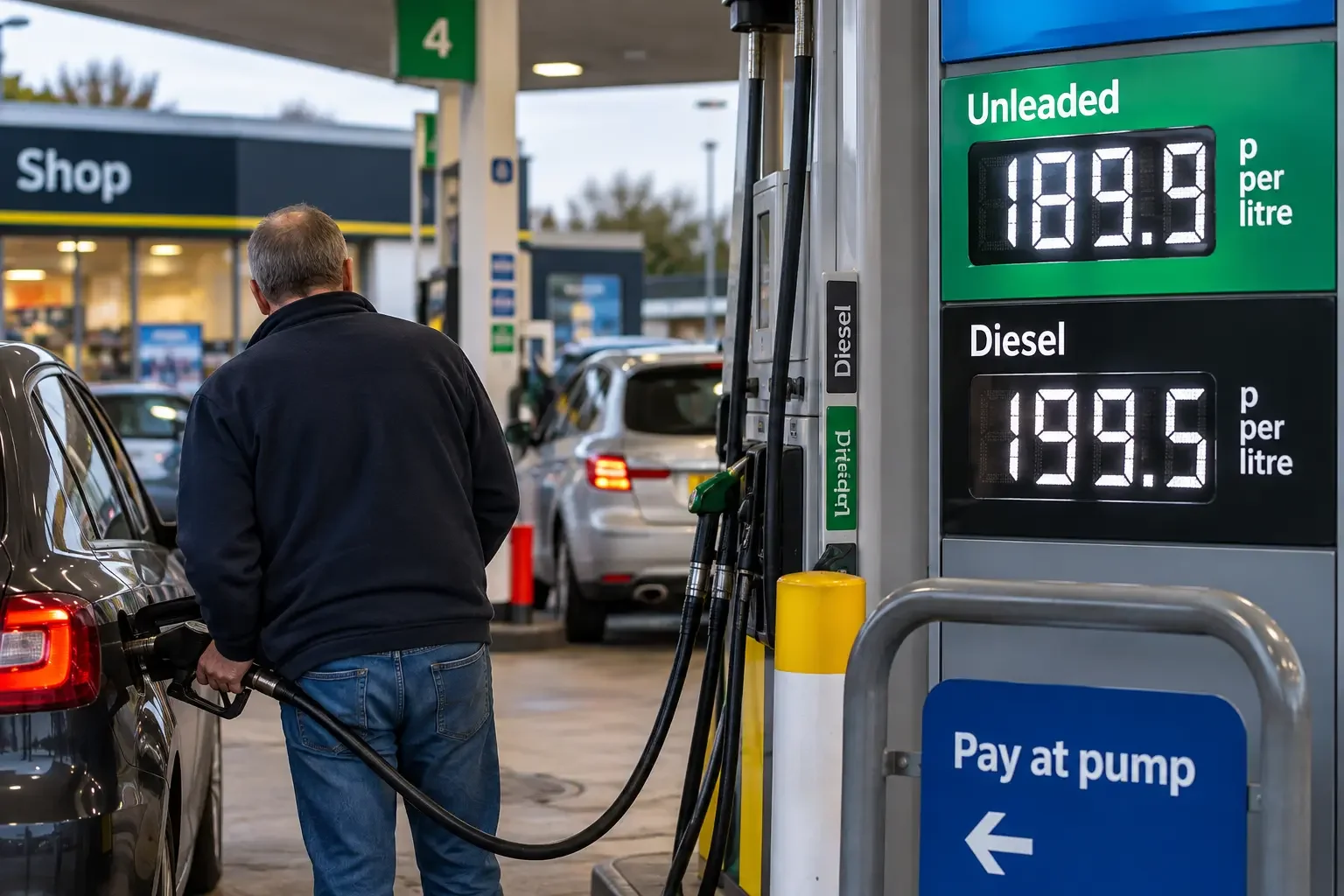
The average UK price of diesel is now around 199.5p a litre according to the latest daily industry figures, taking the cost of filling a typical family diesel car to almost £110.
It marks an extraordinary change from the beginning of the year. Official government figures show diesel averaging 144.19p a litre in the first week of January and falling to around 141p during February.
Since then, motorists have experienced one of the most volatile periods for fuel prices in recent years.
What has happened to diesel prices in 2026?
January and February: prices were still relatively low
At the start of January, the official UK average diesel price was 144.19p a litre. By early February it had fallen to around 140.82p.
March and April: the first major surge
Prices then changed rapidly. By the end of March diesel had reached 176.52p a litre. In April it climbed above 192p before gradually falling back through May and June.
Summer brought only temporary relief
By mid-July the average price had dropped to around 164.5p, but the respite was short lived. Diesel moved above 180p during August and then accelerated again throughout September.
September: diesel moved close to £2 a litre
Government figures show an average of 183.49p at the end of August, 190.72p in the middle of September and 197.58p for the week beginning 28 September.
Daily industry data has since put the average even higher, at around 199.5p a litre, taking diesel beyond the previous record levels seen following Russia's invasion of Ukraine in 2022.
Why has diesel become so expensive?
Global oil and fuel markets have tightened
Much of the latest increase has its roots outside the UK.
Oil and refined fuel markets have been affected by conflict and disruption in the Middle East, pressure on global refining capacity and uncertainty over future diesel supplies.
The UK relies heavily on imported diesel
Diesel is particularly exposed because the UK cannot produce all of the fuel it uses domestically and relies heavily on imported refined diesel. That means changes in global supply, shipping routes and international wholesale prices can feed through quickly to UK forecourts.
Wholesale prices have risen sharply
Brent crude oil prices have also risen sharply during September, while uncertainty over future supplies of refined diesel has added another layer of pressure.
It is not just a problem for diesel drivers
Businesses face higher transport costs
The most immediate effect is obvious to anyone filling a diesel car or van, but the consequences extend considerably further.
Lorries, delivery vans, tradespeople, agricultural machinery and many business fleets remain heavily dependent on diesel. When the cost of operating those vehicles rises, businesses have to decide whether to absorb the extra expense or pass some of it on through higher prices.
Transport costs are feeding into inflation
Office for National Statistics data already shows how important transport costs have become. Motor fuel prices were 23% higher in August than a year earlier, while transport prices overall increased by 4.6%.
Separate ONS business data has also shown transportation and haulage costs becoming an increasingly important reason for businesses considering price increases.
Households can feel the effect even without a diesel car
That matters even to households without a diesel vehicle. Food has to reach supermarkets, parcels have to be delivered, builders and tradespeople have to travel to customers and businesses have to move goods between suppliers, warehouses and shops.
Higher diesel costs therefore have the potential to work their way into everyday prices rather than remaining simply a motoring expense.
Families are changing the way they travel
Some households are cutting unnecessary journeys
For households that depend on a car, particularly in areas where public transport is limited, there is often little scope to avoid higher fuel prices altogether.
But people can change how often they use their vehicle.
Wessex Community Bank says customers have increasingly been talking about the cost of everyday journeys and combining trips to reduce unnecessary mileage.
“I used to think nothing of driving to the shops a couple of times a week, but I don't do that now. I try to combine journeys and I'm having more of the food shopping delivered because once you count the diesel, sometimes it actually makes more sense.”
John, Wessex Community Bank customerIt is a relatively small change, but multiplied across thousands of households it illustrates how rising fuel prices can alter everyday behaviour.
What could happen to diesel prices next?
There are some early signs of easing
The short answer is that the outlook remains unusually uncertain.
Oil prices eased slightly on 29 September as some Middle Eastern crude exports improved, and European diesel futures also fell back from recent peaks. If those trends continue, some of the pressure feeding through to forecourts could eventually ease.
But the risks remain significant
However, that is far from guaranteed.
International fuel markets remain highly sensitive to developments in the Middle East, refinery availability, shipping disruption and the supply of refined diesel from major exporting countries.
The £2 threshold could still be tested
With the UK average already hovering around £2 a litre, even relatively small movements in wholesale markets could determine whether prices move decisively above that level or begin to stabilise.
Pump prices also tend to respond with a delay, so a fall in crude oil or wholesale diesel prices does not necessarily translate into cheaper fuel immediately.
What can drivers do about higher diesel prices?
Compare local forecourt prices
Individual motorists cannot control the global oil market, but there are practical ways of reducing the amount spent on fuel.
Comparing nearby forecourt prices can make a meaningful difference, particularly when buying a full tank.
Combine journeys and improve fuel efficiency
Combining several journeys into one trip can cut mileage, while maintaining the correct tyre pressures and driving more smoothly can improve fuel efficiency.
Short journeys are often disproportionately expensive because engines may not reach their most efficient operating temperature. Walking, cycling, using public transport or arranging deliveries can therefore make sense for some journeys where practical.
Businesses have fewer options
For businesses, the calculation is harder. Delivery routes, customer visits and freight movements cannot simply disappear, which means sustained high diesel prices ultimately become part of the cost of doing business.
A fuel price story that affects far more than the forecourt
The significance of diesel approaching £2 a litre is not simply the number displayed outside filling stations.
It is the speed of the increase and the number of parts of the economy that still rely on diesel.
For motorists it means a substantially more expensive tank of fuel. For businesses it means higher transport and distribution costs. And for households more generally, the concern is how much of those additional costs eventually appear in the price of the goods and services they buy.
After a year in which diesel has already moved from around £1.41 to almost £2 a litre, what happens next will depend heavily on events well beyond the UK's borders.